Skip to content

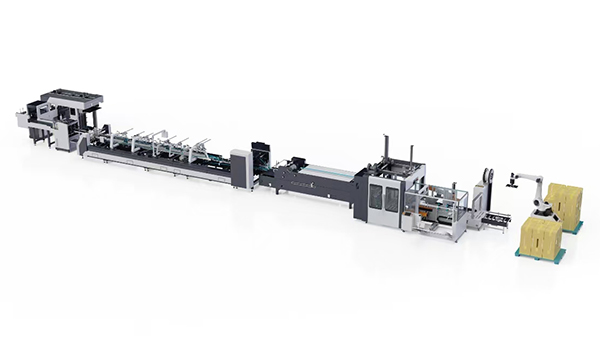
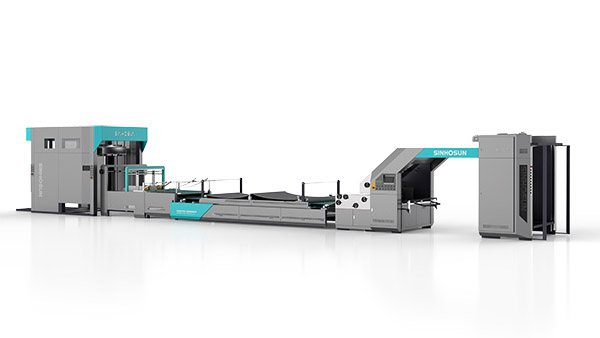

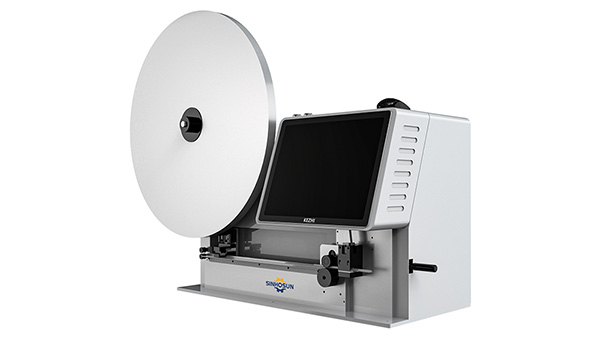










After die cutting, many cartons must have waste removed before they can enter the next process, such as folder gluing or forming. This step is not complicated by itself, but once order mix changes or production speed increases, the choice of automatic separating equipment becomes a practical workflow decision, not a technical debate.
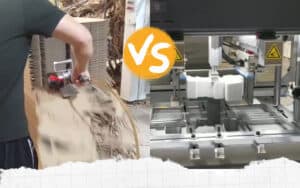
Currently, there are only two real automatic paths for separating waste after die cutting: a die cutter with built-in stripping, or an independent offline blanking machine. Each has clear strengths and limits.
When I talked with a factory supervisor who has worked in packaging for over 20 years, he did not start with machine specs. He looked first at order type, die consistency, and how stable the operator team was.
He explained that the real difference between inline stripping and offline blanking comes from these conditions, not from automation level alone.
Die Cutting Machines with Stripping Function
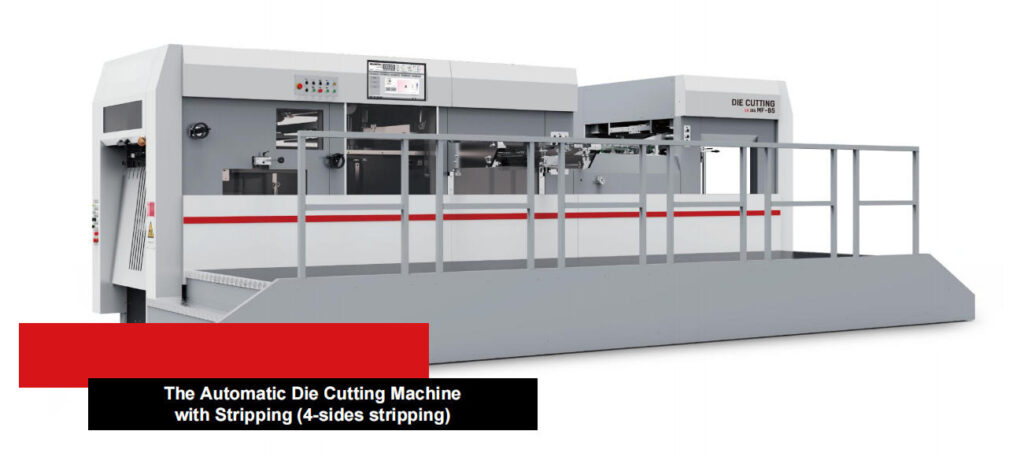
A die cutter with stripping removes waste directly during the die cutting process.
For many factories, this is the most straightforward solution.
Where it fits best
This setup works well when:
- Order structures are stable
- Die layouts do not change frequently
- Production runs are long enough to justify setup time
If your folder gluer runs at a fixed rhythm, inline stripping helps keep everything connected and predictable.
Production efficiency in reality
On paper, inline stripping looks very efficient.
In practice, efficiency depends heavily on die quality and setup skill.
When stripping is well tuned:
- Blanks exit clean
- Downstream feeding is smooth
- Manual intervention is minimal
But when die wear, paper dust, or board deformation appears, stripping quality drops fast.
Then operators slow the machine, or stop to clean and adjust.
Problems you may face
From what I have seen on factory floors:
- Stripping performance is highly die-dependent
- Changeovers take longer than expected
- Small waste bridges or complex layouts increase risk
Once stripping becomes unstable, the whole line feels it.
This is often where production managers start questioning flexibility.

Cost and long-term view
The cost is bundled into the die cutter investment.
You save space and handling, but you pay in:
- Higher tooling requirements
- More skilled setup labor
- Less tolerance for mixed orders
This solution favors factories that value rhythm over adaptability.
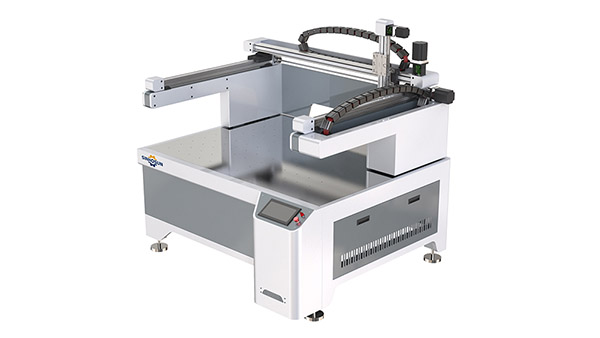
Automatic Offline Blanking Machine
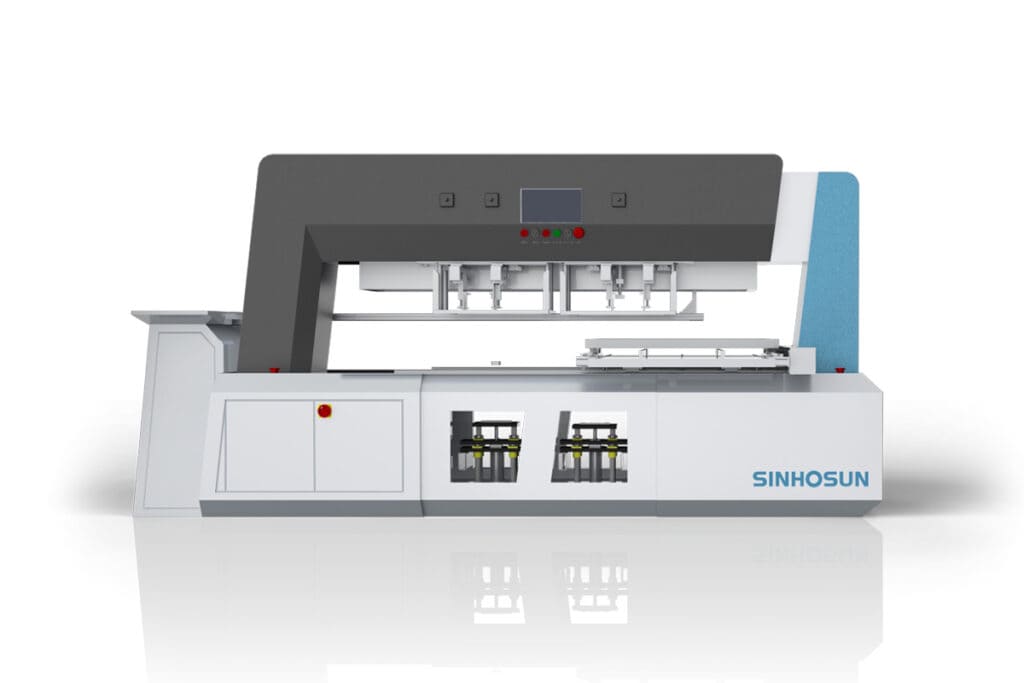
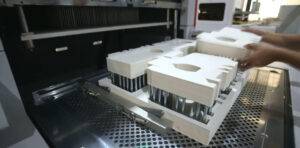
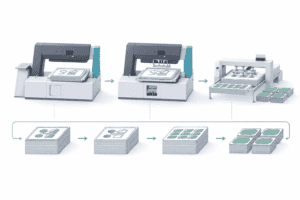
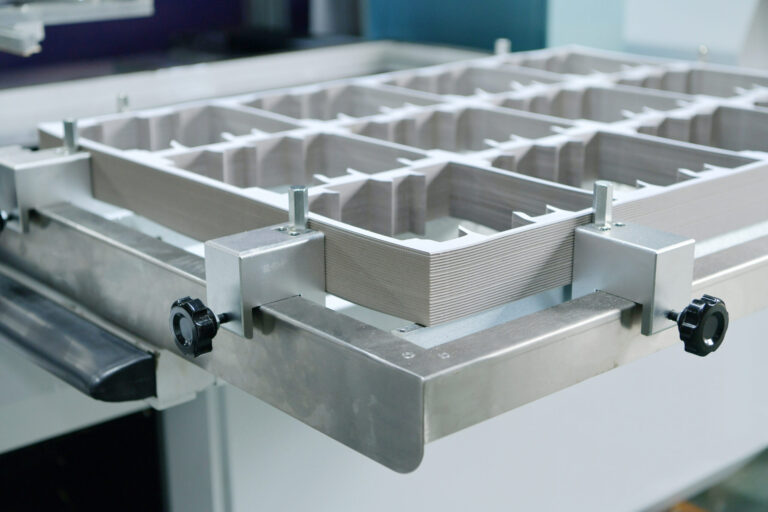
An offline blanking machine separates waste as a standalone process, after die cutting.
This approach changes how you think about production flow.
Where it fits best
Offline blanking works well when:
- Order sizes vary a lot
- Board types change frequently
- One die cutter feeds multiple downstream lines
By decoupling stripping from die cutting, you gain scheduling freedom.
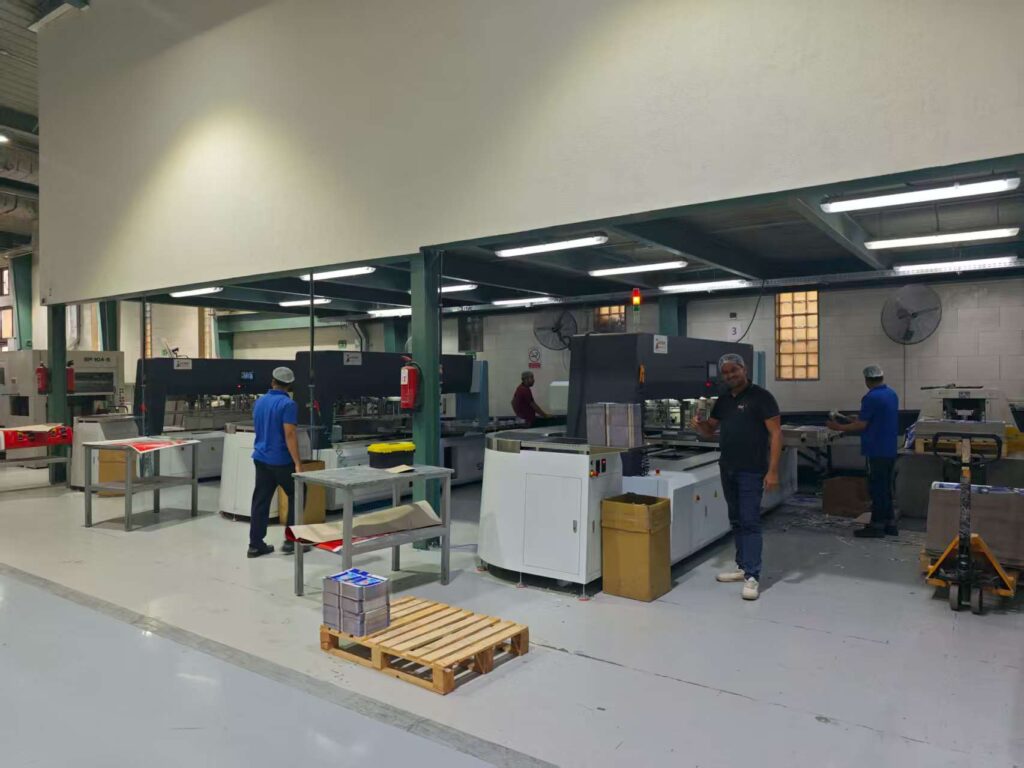
Real efficiency, not just speed
Many people focus on max speed.
In practice, stability matters more.
With a well-matched blanking machine:
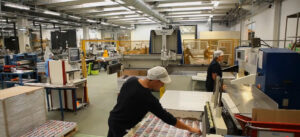
- Operators focus on feeding, not fixing
- Blanks are consistent for folder gluers
- Bottlenecks move out of the die cutting area
I have seen lines run calmer, even if peak speed was not higher.
Typical challenges
This is not a “plug-and-play” machine.
You still need to manage:
- Space planning
- Stack handling between processes
- Initial adjustment for different layouts
But once tuned, the process becomes predictable and repeatable.
Cost structure
Initial investment is separate from the die cutter.
However, many factories underestimate the value of:
- Reduced die complexity
- Lower setup stress
- Easier operator training
In several cases, total operational cost went down after the learning phase.
Companies like SINHOSUN focus heavily on this type of equipment because it aligns well with mixed-order, labor-sensitive factories.

How Automation Level Affects Long-Term Risk
Automation is not just about removing labor.
It reshapes where risk sits in your factory.
Inline stripping:
- Concentrates risk in one machine
- Demands high consistency
- Rewards stable production plans
Offline blanking:
- Spreads risk across processes
- Absorbs variation better
- Gives managers more control over scheduling
The right choice depends on how much uncertainty your workflow already has.
Conclusion: Choose Fit, Not Fashion
There is no universal best option for automatic separating after die cutting.
Both solutions work, and both fail when misused.
If your orders are stable and your team is strong in setup, stripping on the die cutter keeps the line tight.
If your reality includes frequent changeovers and labor pressure, offline blanking gives you breathing room.
From a factory point of view, the safer decision is not the one with more automation, but the one that keeps your downstream processes calm and predictable.